
By SoliVana Wellness · October 15, 2026
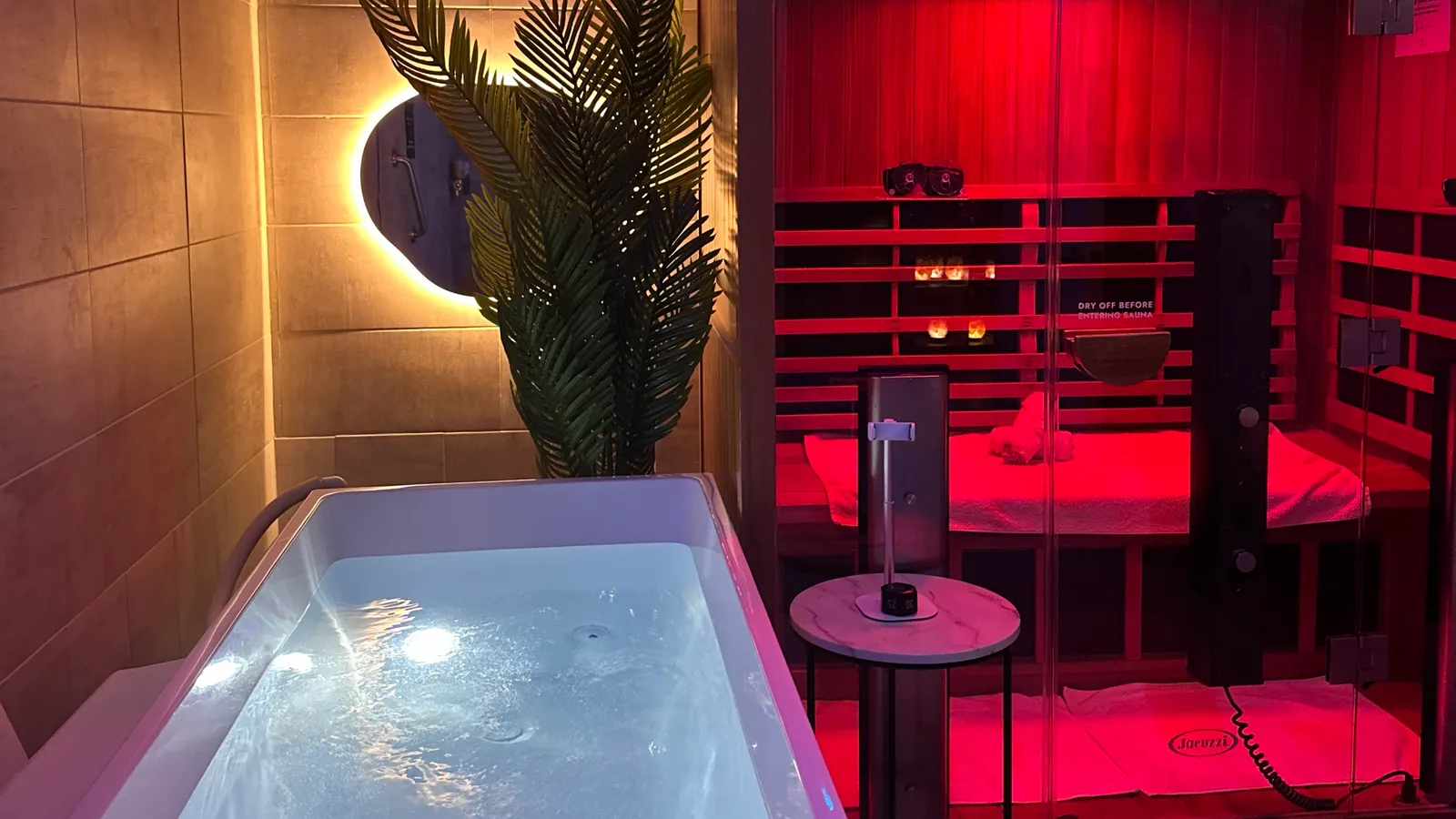
Step into dry infrared warmth, then choose the sharp contrast of cold water in your own Fire & Ice suite. The appeal is the change in sensation and a visit shaped around your comfort—not an endurance challenge.
Cold water can sharply raise blood pressure and strain the cardiovascular system. If you have high blood pressure, heart disease or take blood-pressure medication, consult your physician before any cold plunge or Fire & Ice session. A reading below a particular threshold does not establish that cold exposure is safe for you.
Cold water hits your skin and your sympathetic nervous system fires immediately. Blood vessels at the surface constrict to protect your core temperature. That constriction pushes blood pressure up within seconds, sometimes by a noticeable margin.
Cold exposure can increase heart rate as well as blood pressure. Individual responses vary, which is why a general description cannot establish personal safety.
There is no universal recovery interval that makes cold exposure safe for someone with hypertension. Discuss the specific activity with your physician rather than relying on a time-to-baseline estimate.
Anyone with high blood pressure, cardiovascular disease or blood-pressure medication should obtain individualized physician advice before cold immersion or alternating heat and cold. No single reading or medication count establishes safety. Tell your physician about any stroke, arrhythmia or heart attack history and the medicines you take.
Precautions Before Booking
Well-controlled blood pressure does not by itself make cold exposure safe. Ask your physician specifically about cold immersion and alternating heat and cold, considering your health history and medications, before you book.
Do not use a standard two-minute plunge as a safety prescription. If your physician considers cold exposure appropriate, follow their individualized limits and stop immediately if you feel unwell.
Stop immediately if you feel unwell during or after exposure. Chest pain or tightness, severe breathlessness, fainting or stroke-like symptoms require urgent medical help; do not wait ten minutes to see whether they settle. Discuss other symptoms with your physician before another session.
Choosing Your Visit
Fire & Ice Contrast pairs infrared sauna warmth and cold immersion in a private suite. Small suites accommodate 1–2 people for 45, 60 or 90 minutes; the large suite accommodates up to 4 for 60 minutes with an optional 30-minute extension. These are booking lengths, not exposure prescriptions.
Alternating sauna and cold water is not a gentler or safer default for someone with high blood pressure. Obtain individualized medical advice about both heat and cold before booking; neither should be used to train through a cardiovascular concern.
Tell us your numbers. If you know your typical blood pressure and what medications you're on, share that with our staff before you book.
Our team can explain the experience and booking options, but cannot medically clear you or make cold immersion safe by adjusting a session. Obtain your physician’s advice first and share relevant restrictions before booking.
Avoid breath-holding or hyperventilation. Breathing techniques do not prevent a cold-induced blood-pressure spike and are not a substitute for medical advice about whether to participate.
Skip the plunge if you're dehydrated, haven't eaten in hours, or already feel your heart racing before you get in. Cold exposure adds a stressor on top of whatever your body is already managing.
If you have high blood pressure or take blood-pressure medication, ask your physician whether cold immersion and sauna exposure are appropriate for your individual health history before booking.
If your physician considers participation appropriate, contact us to discuss the experience and any restrictions. Fire & Ice is not a safer substitute for standalone cold immersion, and a shorter session is not a guarantee of safety.
There is no need to rush a first visit or to progress toward colder or longer exposure. Follow your physician’s advice about whether participation is appropriate.