
By SoliVana Wellness · March 8, 2026
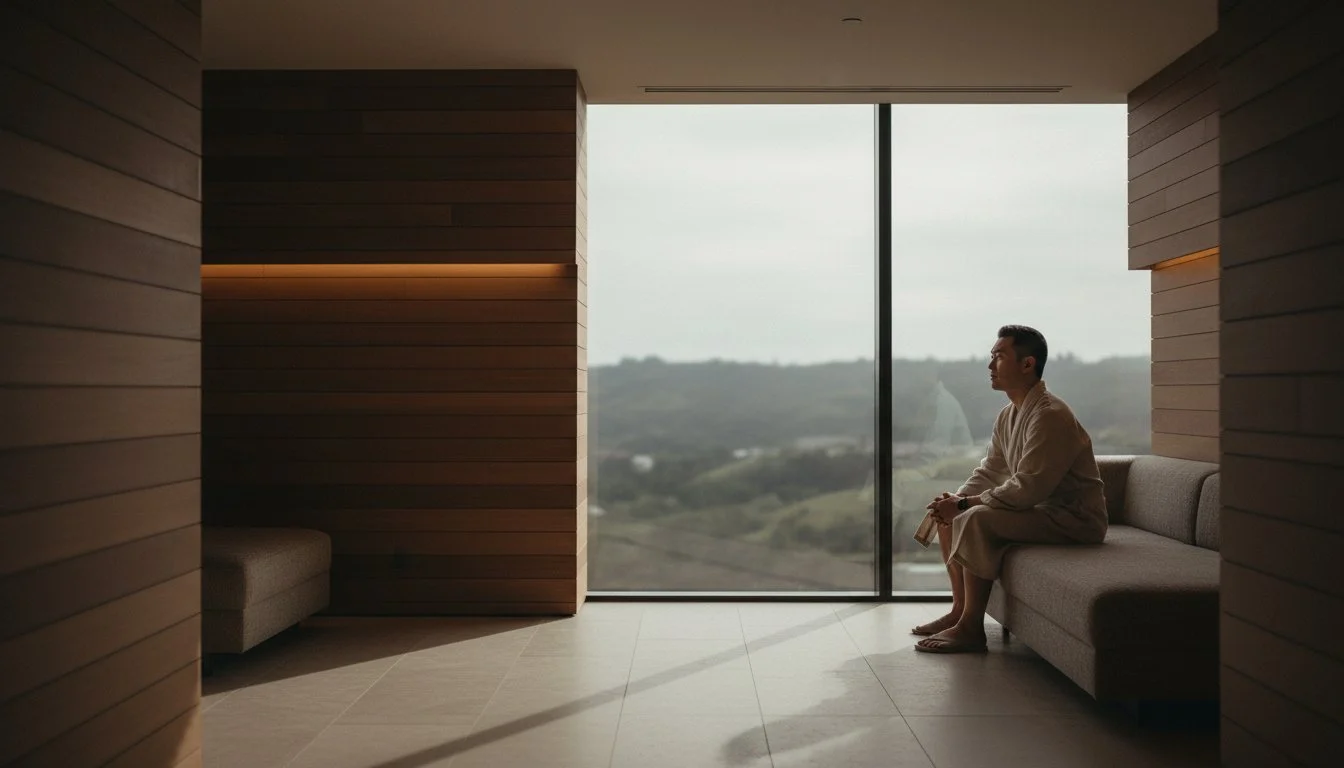
What a float spa offers that a standard rest break does not
The earlier discussion compared flotation with massage, meditation and other downtime. The distinctive feature is supported rest in salt water with fewer external inputs, not a proven ability to turn off the prefrontal cortex. You do not have to meditate, fall asleep or stop having thoughts. Ask about the tank and suite rather than assuming every float spa uses the same design.
Buoyancy and reduced stimulation: what the setup does
In flotation-REST, restricted environmental stimulation refers to reducing external inputs, not eliminating all sensation. Dense Epsom-salt water supplies buoyant support; darkness and silence are options rather than requirements for a successful visit. Gravity does not disappear, and buoyancy should not be described as spinal treatment or proof of magnesium absorption.
Research on flotation includes small studies of self-reported stress and anxiety. Samples, comparison groups and follow-up periods vary. Quiet rest, expectations and the setting can contribute to reported changes, so proposed mechanisms involving cortisol, the amygdala or brain waves should not be presented as measured effects of a SoliVana session.
What an HRV reading can actually tell you
Heart rate variability is variation in the intervals between successive heartbeats, not the same thing as average heart rate. It is influenced by breathing, sleep, exercise, illness, alcohol, medication and the measurement method. Comparing readings taken under different conditions can be misleading.
HRV can be useful in research and in cautiously observing personal trends, but one number does not diagnose burnout, anxiety or autonomic dysfunction. A higher reading is not an unlimited good, and a post-session change cannot establish that a modality repaired the nervous system. Track ordinary functioning and the wider context rather than trying to win a daily score.
Questions About This Topic
Is it a failure if I keep thinking?
No. Thinking is normal. The appointment is not a test of meditation skill or a required brain-wave state.
Warm, buoyant water and a private room offer a very different kind of pause from sitting on the sofa. REST Float gives you time away from conversation and screens, with lighting and music you control.
REST Float offers time in warm water saturated with Epsom salt, with lighting and music under your control. The salt makes the water buoyant; the attraction is the unusual sensation of being supported while you take a break from screens and conversation.
All three float rooms use the same tanks. Room 3 has a larger ADA shower with a fold-down seat. If access or enclosure is a concern, discuss the layout and getting in and out before booking rather than assuming a particular room will suit you.
Choosing Your Visit
- Ask about current float-water maintenance and between-guest cleaning before booking if you would like those details. Do not infer a specific filtration cycle, disinfection method or sterility guarantee from the salt content. Open wounds and skin concerns should be discussed before a visit.
Float naked in your private suite and shower before and after the session. Towels, robe, slippers, shampoo, conditioner, shower gel and earplugs are provided. Ask about open wounds, skin conditions, epilepsy or kidney disease before booking.
Keep the first visit simple. Choose one experience, leave room for preparation and changing, and note what was comfortable or inconvenient afterward. Those observations can guide another visit without turning rest into a performance test.
Precautions Before Booking
Flashing light and sound are not appropriate for everyone. Discuss epilepsy, photosensitivity, migraines and other relevant concerns with your clinician and the team before booking NeuroVIZR Brain Reset. Choose the experience for its sensory format, not a promised cognitive result.
NeuroVIZR Brain Reset is the official name of a 25-minute light-and-sound experience. A practitioner asks about your goals and selects a program. Discuss sensory preferences first; the name does not establish that the device changes brainwaves or treats anxiety.
Choose a REST Float length that fits your day: 45, 60, 75, 90 or 120 minutes, at standard prices of $110, $130, $150, $170 or $210 respectively. Leave time around the water portion for showering and changing, and avoid rushing straight into another commitment.
Preparing for Your Visit
Wait at least three weeks after colouring your hair before floating, and longer if colour still runs when rinsed. This applies even if a shorter wait appears in general hair-care advice. Check with your stylist about highlights, henna or keratin treatments, and confirm suitability before booking; no timing rule guarantees that colour or a treatment will be unaffected.
Enclosed spaces feel different to different people, so a float is not automatically comfortable for someone with claustrophobia. All three rooms use the same tanks; there is no adjustable canopy. You control lighting and music. Ask about the setup and entry and exit before deciding whether to book.
A demanding work schedule can make protected downtime difficult to arrange. Put the appointment in a realistic gap, allow for the journey and resist packing every spare minute with another task. The value is dedicated time away from everyday demands.
REST Float takes place in a private suite, while Salt Room Halotherapy is communal and may be shared. If privacy is important, ask about the specific experience, changing arrangements and handling of personal information before booking; a private room does not establish a confidentiality or soundproofing guarantee.
A useful wellness plan starts with preferences you can describe: quiet or sensory stimulation, a short appointment or a longer break, time alone or a shared setting. Compare the actual format and practical requirements before choosing an experience.
Personal tracking can be useful for noticing patterns, but a wearable reading does not diagnose burnout or establish that a session changed nervous-system function. Consider the wider context, including work demands, daily habits and any symptoms that need professional assessment.
Making Time for the Experience
There is no established Solivana session count or schedule that guarantees a health result. Start with a visit that fits your interests, budget and suitability, then decide whether the experience is something you want to repeat. Avoid buying a series on the expectation of a particular biomarker change.
Check eligibility directly with your HSA/FSA administrator or insurer before purchasing. A wellness booking, receipt or medical-sounding service name does not itself establish reimbursement eligibility.
REST describes reduced input, not a task to master
Restricted Environmental Stimulation Therapy is the research term often abbreviated REST. Flotation REST combines buoyant support with a setting designed to limit incoming sensory demands. This differs from simply lying down while continuing to read, answer messages or follow a video.
Reduced input does not mean that thoughts must stop. A person may notice thoughts, ordinary body sounds or the passage of time more clearly when there are fewer distractions. That does not establish a special brainwave state or mean the session has failed. The relevant practical question is whether this kind of quiet is comfortable for you.
Do I have to meditate throughout the float?
No particular concentration technique is required to choose floating as leisure. Formal meditation is a practice with its own methods; a float provides an environment. You can prefer one, both or neither without treating them as competing measures of how well you can relax.